
Multi-Tenant Apartment Video Intercom System Design: Commercial Wiring, Cost & Installation Guide
Designing a modern multi-tenant intercom system requires selecting between IP PoE for new builds and non-polarized 2-wire bus for retrofits. Both topologies support centralized SIP call routing, 1080P video streaming, RFID/Face ID access control, and mobile app door release, lowering overall hardware and maintenance costs by 45% compared to proprietary legacy systems.
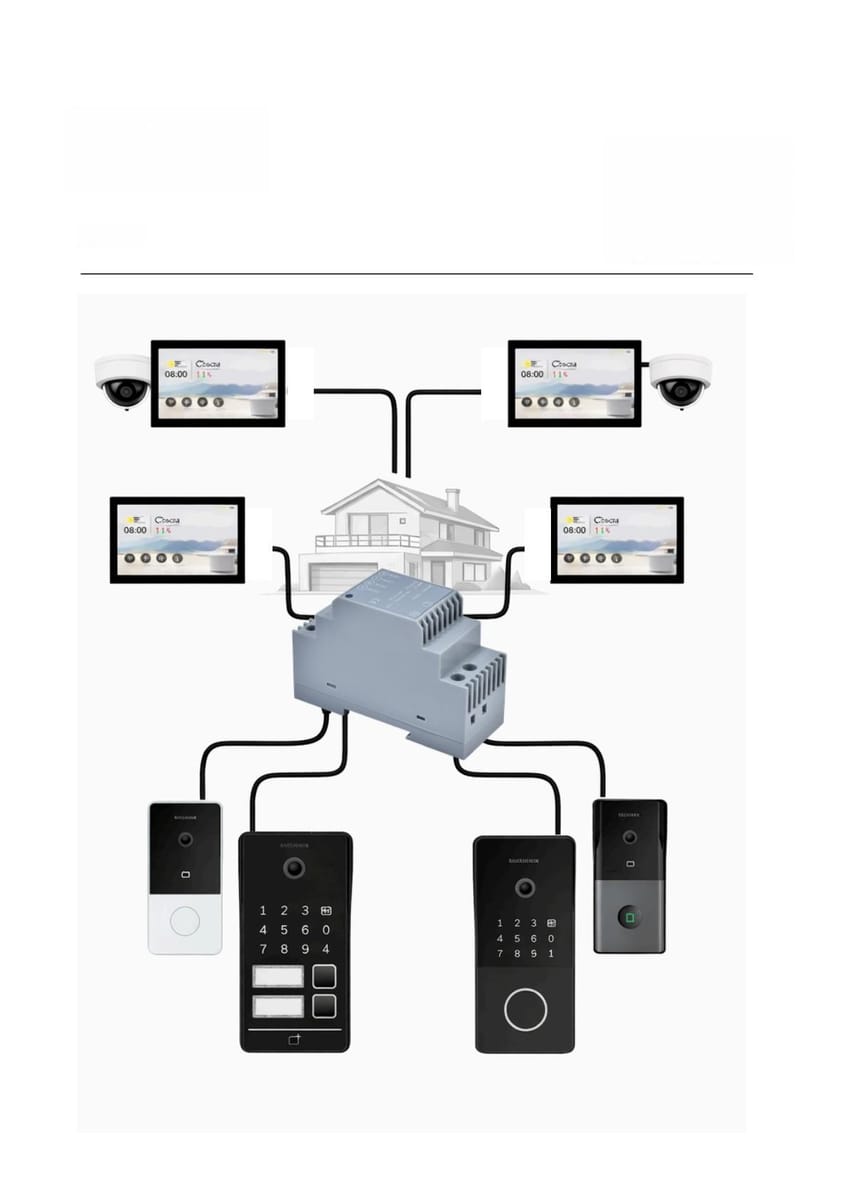
Designing a reliable video door phone system for multi-tenant residential buildings, residential condominiums, and gated communities involves balancing capital expenditure, installation complexity, and long-term maintenance overhead. Modern property developers and building managers no longer accept obsolete audio-only handsets; contemporary tenants demand high-definition video verification, seamless smartphone app notifications, and flexible visitor entry management.
Commercial security integrators must choose the optimal network topology for each building: Native TCP/IP PoE or Non-Polarized 2-Wire Digital Bus. For greenfield developments with pre-installed Cat5e or Cat6 structured cabling, standard IEEE 802.3af PoE allows every outdoor door station and indoor touch screen monitor to draw power and data from central managed network switches, supporting virtually unlimited scalability across high-rise residential towers.
Conversely, in existing multi-family renovations where ripping open walls to install Ethernet is economically non-viable, 1 Karat's commercial 2-wire bus architecture delivers identical 1080P full HD digital video and mobile cloud connectivity over existing non-polarized 2-core copper lines. Utilizing centralized 2-wire bus distributors (such as the 1 Karat KA2201-P), property managers can deploy outdoor stations supporting up to 16 direct physical call buttons (or digital directory keypads) with zero wall reconstruction.
Crucially, modern multi-tenant intercom architecture must decouple in-apartment monitors from visitor calling. Even if an apartment owner is traveling abroad, incoming door calls ring both the wall-mounted indoor touch monitor and the tenant's smartphone via the encrypted Tuya Smart / SIP cloud service, allowing two-way audio verification and remote door release from anywhere in the world.
1 Karat Commercial Systems Lab: 64-Apartment Concurrent Load & Failover Test
Architectural Comparison Matrix
| System Parameter | 1 Karat 2K IP PoE Multi-Tenant | 1 Karat 2-Wire Bus Multi-Tenant | Traditional Analog Multi-Tenant PBX |
|---|---|---|---|
| Target Construction Type | New multi-family buildings & luxury high-rises | Existing apartment retrofits & heritage properties | Legacy low-rise buildings (outdated standard) |
| Cabling Infrastructure | Standard Cat5e / Cat6 UTP (PoE 48V) | Existing 2-core copper wire (RVV 2×0.75mm²) | Multi-core proprietary shielded cable (6-8 wires) |
| Maximum Door Stations & Monitors | Unlimited across IP subnets / VLANs | Up to 32 indoor monitors per bus distributor | Strict physical limits (typically <16 units) |
| Mobile App Cloud Unlocking | Native Tuya Smart / SIP WebRTC integrated | Integrated via Wi-Fi indoor master monitor | Unsupported (requires expensive third-party dialer) |
| Per-Apartment Hardware Cost | Medium ($110 - $160 per unit average) | Low-to-Medium ($85 - $130 per unit) | High ($140 - $220 including dedicated PBX box) |
| Average Installation Labor Hours | 0.5 hours per apartment (RJ45 plug-and-play) | 0.3 hours per apartment (no rewiring needed) | 2.5 - 4.0 hours per apartment (complex wire tracing) |
Frequently Asked Technical Questions
How many apartment indoor stations can be connected to a single 1 Karat multi-tenant outdoor station?
In standard IP PoE configurations, 1 Karat door stations support up to 999 digital apartment destinations via directory search, or up to 16 direct physical call buttons on modular faceplates (e.g., KA-FV5208 / KA-FV2208 series). In 2-wire bus setups, each bus distributor supports up to 32 indoor monitors, which can be cascaded across multiple risers.
Does the property need dedicated internet lines running to each individual apartment?
No. For mobile app calling, only the central IP intercom network requires an internet uplink (or the resident indoor monitor connects to the tenant's private Wi-Fi). The building intercom bus handles local communication securely without consuming tenant broadband.
How do property managers manage resident access credentials (RFID, Face ID, PIN)?
Access credentials can be batch-enrolled locally via master administrator cards, entered directly via the outdoor station keypad, or managed centrally over the local web administration console and Tuya cloud portal.
Featured Hardware for this Architecture
KA-FV5208 Series - Villa / Apartment Video Doorbell Station
2K multi-tenant IP video intercom station with 4/6/8/16 direct call buttons and biometric access.
KA-FV2208 Series - 2-Wire Multi-Tenant Outdoor Station
Modular 2-wire bus outdoor unit engineered for apartment and condominium retrofits.
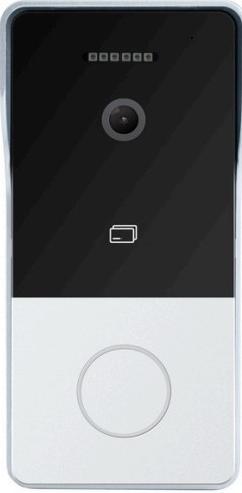
KA5703 - 7-Inch Android IP Indoor Monitor
2.5D curved glass capacitive touchscreen monitor with Wi-Fi and Tuya Smart app integration.
KA5103 - 10.1-Inch Master Touch Console
Large-format architectural indoor station for luxury multi-room intercom management.
Planning a Commercial or Residential Project?
Contact 1 Karat's solution architects for custom wiring diagrams, sample kit requests, and OEM/ODM manufacturing partnerships.